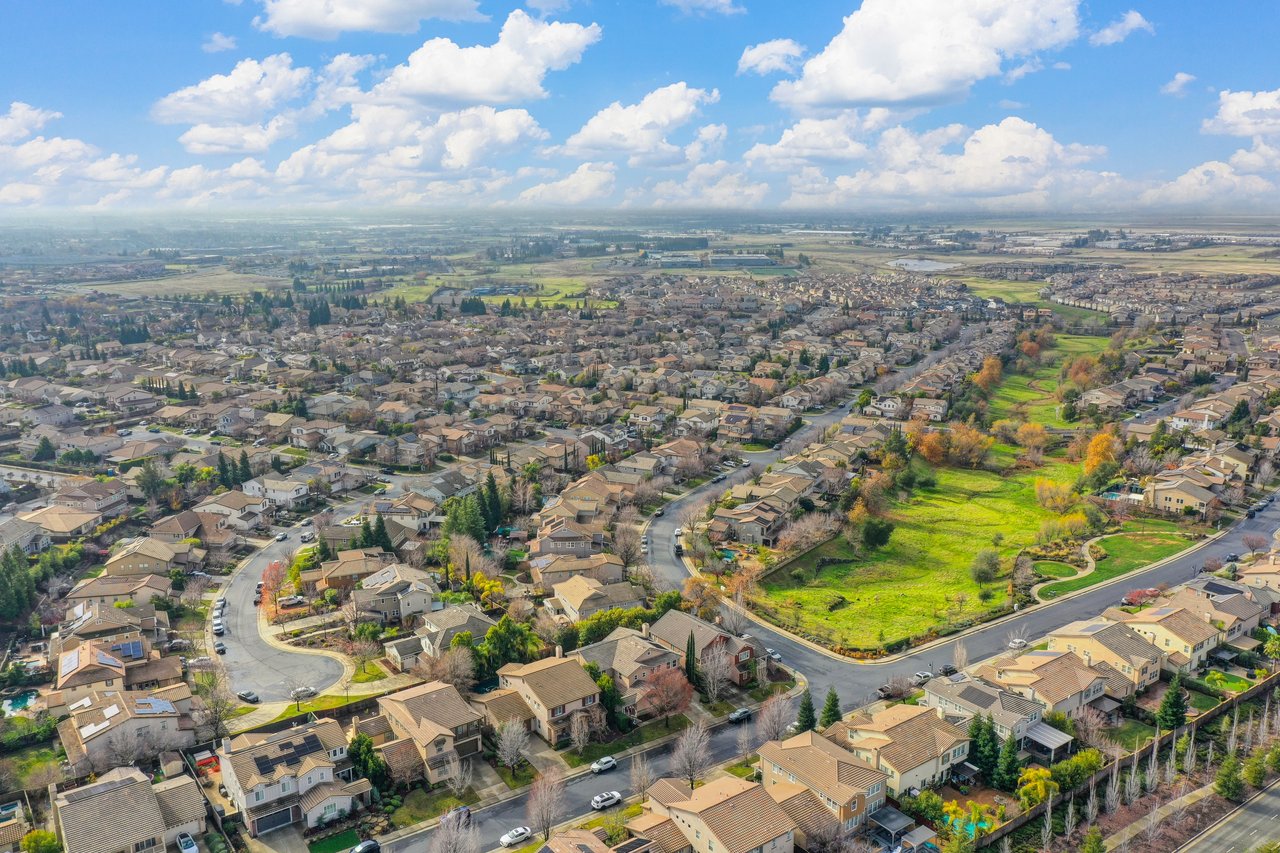
If you are deciding between gated and non-gated living in El Dorado Hills, you are not just choosing a home. You are choosing how you want your day-to-day life to feel, how much structure you want around your property, and which trade-offs matter most to you. In a market where homes have recently sold in about 19 days on average and the median sale price reached $866,232 over the three months ending May 2026, it helps to know what each option really offers. Let’s break down what gated and non-gated living usually means in El Dorado Hills so you can compare with confidence.
Why This Choice Matters in El Dorado Hills
El Dorado Hills has long been shaped by village-based planning, open space, and scenic foothill terrain. That planning history is a big reason why the area offers a mix of master-planned neighborhoods, custom-home pockets, public amenities, and private community features.
This also means the gated versus non-gated decision here is more nuanced than it may be in other suburbs. In many parts of El Dorado Hills, your lifestyle is influenced not only by your neighborhood entrance, but also by access to parks, trails, recreation facilities, and the overall layout of the community.
A key point for buyers is that many local amenities are public or district-run rather than exclusive to a gated neighborhood. The El Dorado Hills Community Services District inventory includes places like Ridgeview Park, Governor’s Ponds, Promontory Community Park, and Village Green @ Serrano, along with a broader network of community parks, village parks, open space, and recreation facilities.
What Gated Living Usually Means
In El Dorado Hills, gated living often means buying into a common-interest development, or CID. In these communities, features like streets, gates, and shared recreational spaces may be privately owned and maintained, and homeowners typically become members of a homeowners association.
That structure usually comes with shared rules, maintenance obligations, and recurring dues. California Department of Real Estate guidance also notes that buyers in these communities should review the CC&Rs, budgets, and the public report before purchasing.
For many buyers, the appeal is simple. Gated neighborhoods often offer controlled access, a more uniform streetscape, and amenities that are maintained through the association or connected club structure.
Serrano as a Local Gated Example
Serrano is one of the clearest examples of gated living in El Dorado Hills. Serrano Country Club describes a large master-planned community centered around a championship golf course and a 34,000-square-foot clubhouse, with dining, tennis, pickleball, a junior Olympic-sized pool, and a fitness center.
The Serrano El Dorado Owners’ Association also highlights features that many buyers associate with this lifestyle, including 24-hour roaming security, 17 miles of walking trails, 1,000 open acres, and year-round community events. For some buyers, that combination creates a more structured and amenity-driven environment.
In newer gated sections of El Dorado Hills, you will also often see a polished architectural style. County design guidance identifies Neo-Mediterranean design as a strong match for recent development trends, with details like tiled roofs, stucco siding, arches, porches, and connections to shared open spaces.
What Non-Gated Living Usually Means
Non-gated living in El Dorado Hills often shows up in older villages, more standard subdivisions, or custom-home areas that are not organized around private gates. In a standard subdivision, the owner typically holds the lot directly, and there may not be the same level of shared ownership or HOA governance found in a CID.
In practical terms, that can mean a more individualized street feel and sometimes more owner autonomy. That said, non-gated does not always mean no rules, no fees, or no recorded restrictions. Buyers still need to verify parcel-specific CC&Rs, assessments, and maintenance responsibilities.
For many move-up buyers and relocators, this category feels more flexible. You may find a broader mix of home styles, lot sizes, and neighborhood character than you would in a more uniform gated setting.
Ridgeview Village as a Local Non-Gated Example
Ridgeview Village is a helpful example of non-gated living in El Dorado Hills. Neighborhood data describes custom-built homes on rolling hills, a more established hillside setting, and proximity to El Dorado Hills Town Center and Folsom Lake.
The same data notes that some homes in Ridgeview Village have no HOA or Mello-Roos fees. Reported values and listings also show a wide range, from roughly $700,000 to $2.7 million, which reflects the variation that buyers often see in non-gated custom-home pockets.
That variety can be a major advantage if you want a home with a more distinct lot, layout, or setting. It can also mean you need to do a little more homework, because the neighborhood may be less standardized from one property to the next.
Lifestyle Differences to Consider
The biggest difference between gated and non-gated living in El Dorado Hills is usually not status. It is structure.
Gated neighborhoods often appeal to buyers who want:
- Controlled access
- Shared amenities
- A more consistent visual character
- Association-managed maintenance of certain common areas
- A neighborhood environment with more defined rules and standards
Non-gated neighborhoods often appeal to buyers who want:
- More autonomy over the property’s day-to-day feel
- Fewer layers of association oversight in some cases
- More variation in architecture and lot configuration
- Established custom-home settings or older village patterns
- Flexibility that may come with a less uniform neighborhood layout
Neither option is automatically better. The right fit depends on how you want to live, what kind of upkeep and rules you are comfortable with, and whether you value shared amenities over flexibility.
Amenities Are Not Only Behind Gates
One common misconception is that you need a gated neighborhood to enjoy a strong lifestyle in El Dorado Hills. In reality, the area’s public and district-supported amenities are a major part of everyday life regardless of gate status.
The El Dorado Hills Community Services District plays a central role in parks, recreation, and open-space services. Its service list also includes things like street lighting and landscape, solid waste collection, and in some areas CC&R administration.
That is important because a neighborhood can benefit from district services while also having private HOA rules, or it may rely more heavily on one structure than the other. As a buyer, you want to understand exactly which responsibilities belong to the district and which belong to a private association.
Costs and Due Diligence Matter
Before you decide that gated or non-gated is the better deal, look closely at the full cost picture. California DRE guidance recommends confirming special taxes, assessments, HOA dues, and other recurring costs before making an offer.
If you are buying in a common-interest development, the DRE public report can provide details on utilities, water, roads, soil and geologic conditions, title, zoning, use restrictions, hazards, and financial arrangements for completion of the subdivision. Governing documents like the Articles, Bylaws, and Declaration are also critical if you want to understand how the community operates.
For non-gated homes, due diligence is still essential. Even if a property is not inside a gate, it may still have CC&Rs, assessments, or maintenance obligations tied to the parcel.
Wildfire Planning Applies to Both
In a foothill setting like El Dorado Hills, wildfire due diligence matters whether you buy behind a gate or not. Gate access can be a lifestyle feature, but it does not replace evacuation planning, defensible-space maintenance, or an insurance review.
El Dorado County’s Office of Wildfire Preparedness and Resilience has a 2026 Community Wildfire Protection Plan, a Firewise Communities program, an emergency alert system for evacuations and urgent events, and a defensible-space ordinance. These are practical issues every buyer should understand before closing.
This is one of the most important reminders for luxury and move-up buyers in the area. A beautiful home and a well-kept neighborhood are only part of the equation. You also want to be clear-eyed about long-term ownership responsibilities.
Which Option Fits You Best
If you are drawn to newer homes, polished community presentation, and shared amenities, gated living may feel like the better fit. This is often true for buyers who want a more managed environment and appreciate the consistency that comes with HOA structure.
If you prefer a custom-home feel, more variation from property to property, or fewer recurring association layers in some cases, non-gated living may offer the flexibility you want. That can be especially appealing if you value individuality in the home and lot more than you value community-managed amenities.
In El Dorado Hills, both paths can work well. The key is to match the neighborhood structure to your lifestyle, budget, and comfort level with rules, dues, and maintenance obligations.
When you are comparing options in a market this competitive, it helps to have local guidance that goes beyond the gate itself. If you are weighing neighborhoods, home styles, and ownership costs in El Dorado Hills, Brian Perry & Brian Perry Real Estate Group can help you sort through the details and make a confident move.
FAQs
What does gated living in El Dorado Hills usually include?
- Gated living in El Dorado Hills often includes HOA membership, shared maintenance responsibilities, private rules through CC&Rs, and in some communities amenities like trails, pools, club facilities, or roaming security.
What does non-gated living in El Dorado Hills usually mean?
- Non-gated living in El Dorado Hills often means homes in standard subdivisions, older village areas, or custom-home pockets where there is less emphasis on private gate systems and sometimes more variation in home style and parcel setup.
Are all El Dorado Hills gated neighborhoods the same?
- No. Gated neighborhoods in El Dorado Hills can differ significantly in amenities, architecture, dues, lot sizes, and the level of HOA oversight, so each community needs to be evaluated on its own terms.
Do non-gated homes in El Dorado Hills always have no HOA?
- No. Some non-gated homes may have no HOA, but others can still have CC&Rs, assessments, or maintenance obligations, so buyers should confirm the details for each property.
Are parks and recreation in El Dorado Hills only for gated communities?
- No. Many parks, open spaces, and recreation facilities in El Dorado Hills are public or district-run, which means buyers in both gated and non-gated neighborhoods can benefit from them.
What should buyers review before purchasing in an El Dorado Hills gated community?
- Buyers should review HOA dues, special taxes or assessments, CC&Rs, budgets, and the DRE public report, along with any other governing documents that explain restrictions and shared obligations.
Does a gated neighborhood in El Dorado Hills reduce wildfire risk?
- A gate may affect access and neighborhood layout, but it does not replace evacuation planning, defensible-space maintenance, emergency alerts, or insurance review.
Is gated or non-gated living better for luxury buyers in El Dorado Hills?
- It depends on your priorities. Some luxury buyers prefer gated communities for controlled access and amenities, while others prefer non-gated custom-home areas for individuality, lot variation, and a less standardized feel.